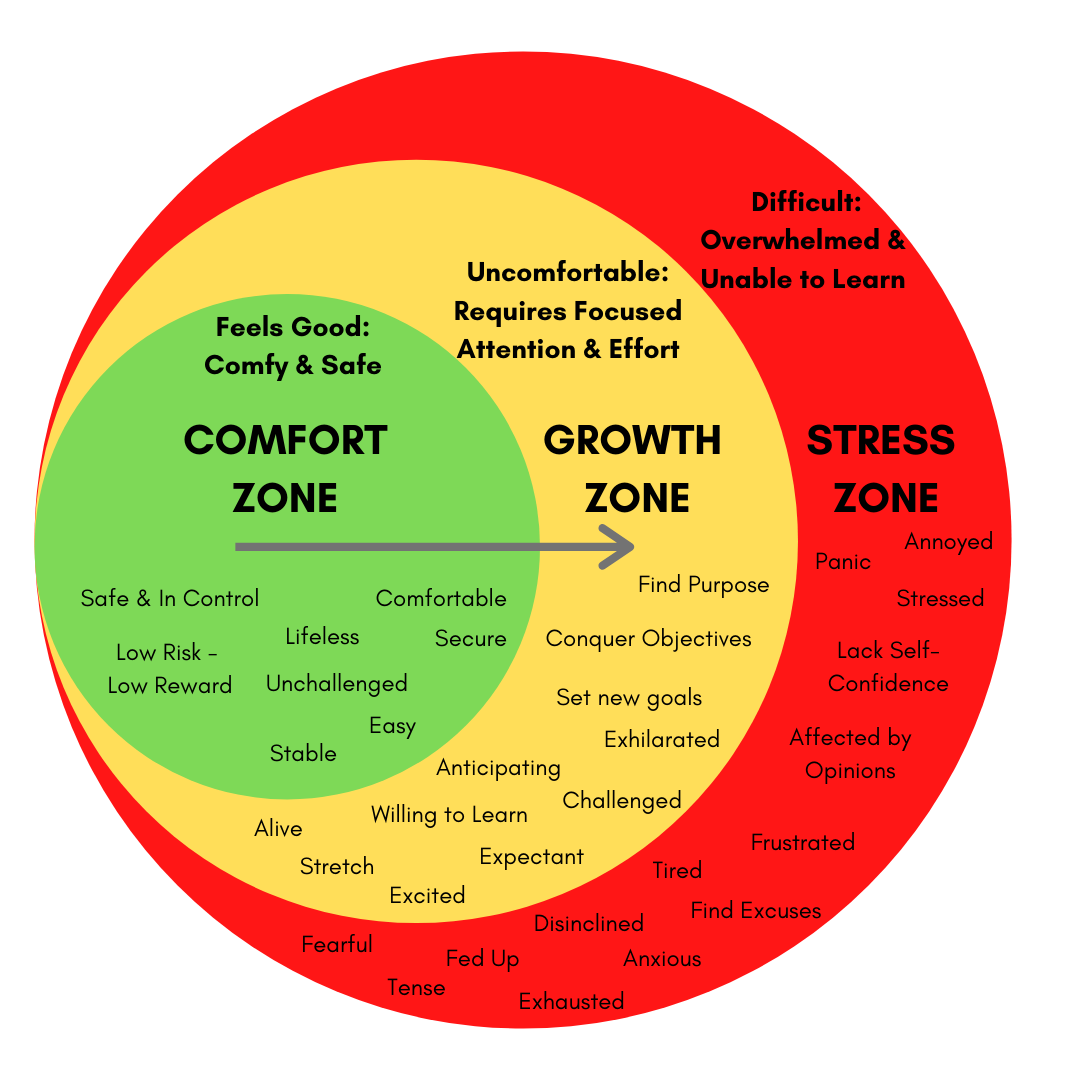
Back in 2019, when I was barely surviving a bootcamp at General Assembly, we were shown a chart about the Growth Zone. The idea is pretty straightforward—stay in your comfort zone, and you won’t grow. Push too far, and you’ll end up overwhelmed in the stress zone, where growth isn’t happening either.
The chart usually has a nice, neat little arrow, implying that most people stick to their comfort zone and just need a nudge to step into growth.
For a lot of people, that probably makes sense. You try something new, push yourself a little, and if it gets too stressful, you just… slow down, step back, and adjust. I imagine that neurotypical people move through these zones at a reasonable pace—kind of like a dial that turns up and down gradually.
But If You're Neurodivergent...
It doesn’t really work like that.
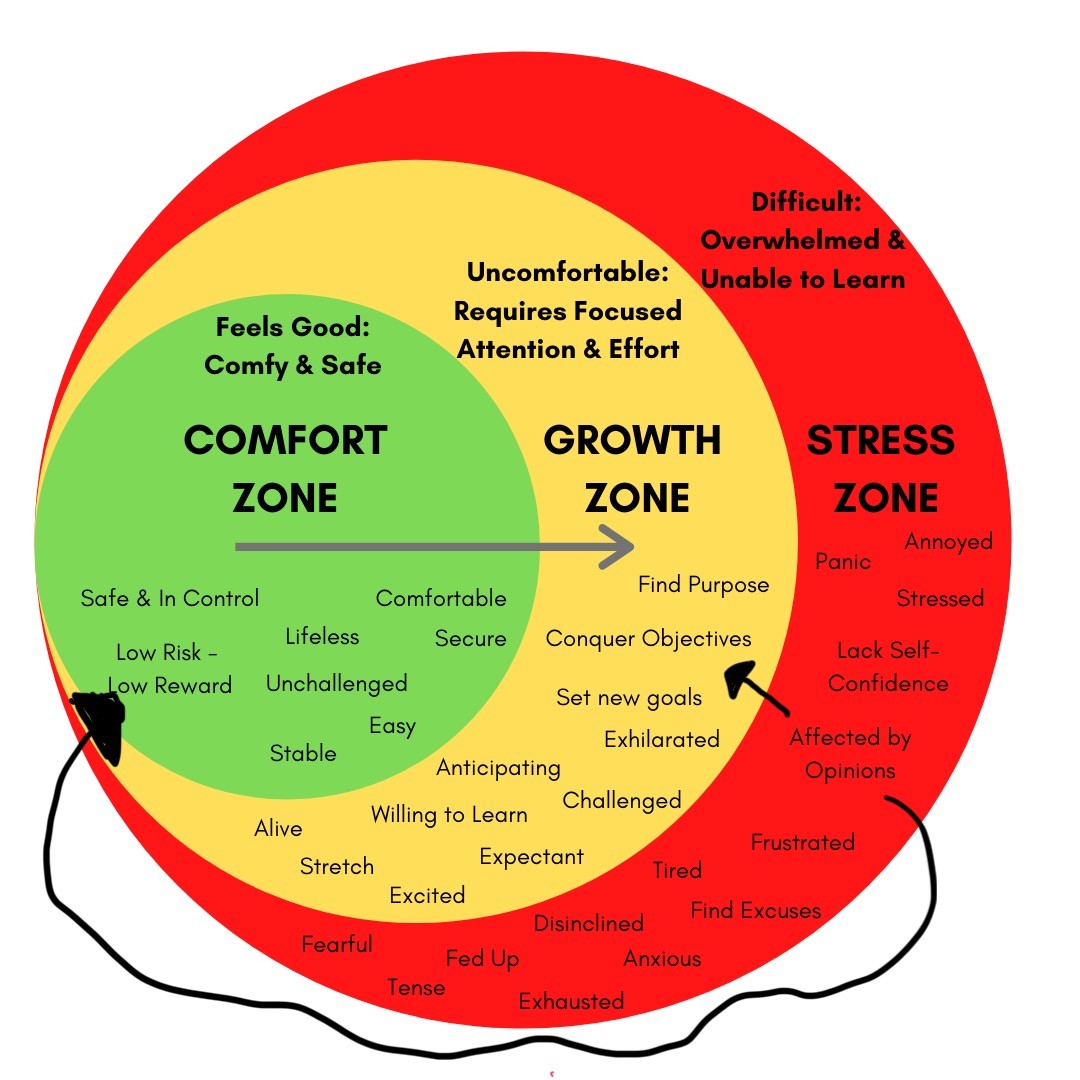
Neurodivergent brains don’t do gradual. We don’t slowly nudge our way into something unfamiliar. More often, we have an idea, and before we’ve even finished the thought, our brain has already raced through every possible scenario—every risk, every potential failure, every unexpected detour.
It’s like mentally speedrunning an entire project before even taking the first step. It’s exhausting. And instead of comfortably easing into growth, we end up skipping straight over it and landing right in the stress zone.
For a long time, I didn’t realise I was doing this. Stress was just my default state. And when that’s where you’re starting from, trying to grow isn’t just tough—it feels impossible.
Where a neurotypical person might step back into the growth zone when things get overwhelming, for me, the best thing I could do was step back into comfort first.
So How Do You Actually Grow?
People are often told to push themselves, but if your default zone is already stress, then this is really bad advice. Instead, it’s worth considering a more risk-averse strategy—one that starts with choosing what feels comfortable.
Someone I know put it perfectly: “Choose what’s peaceful to you.”
That doesn’t mean doing nothing, and it doesn’t mean avoiding challenges. But it does mean recognising that growth doesn’t have to come from struggle. When you start from a place of comfort, you’ll probably branch out into the growth zone in a much more natural, sustainable way. And once comfort becomes your default, stepping into growth feels a whole lot easier.
Making It Easier
One of the biggest things that has helped me is making everything smaller. The phrase “Less is more” applies to a lot of things, but especially this. The smaller something is, the less there is to process. Instead of tackling something huge and overwhelming, I try to focus on the tiniest step possible—something peaceful, something easy.
And if I catch myself spinning out, the best thing I can do is stop. Stepping away doesn’t mean giving up; it just gives my nervous system time to settle. Whether that’s a walk, making some tea, watching a video, or sitting in a quiet space for a few minutes, I’ve found that taking a break almost always makes things feel less impossible.
Writing helps too. Even if it’s just scribbling down all the nonsense running through my head, getting it out of my brain and onto a page makes it easier to see what’s actually important.
Learning to Recover Faster
Even though I spend a lot more time in my comfort and growth zones these days, I still land in the stress zone with little to no warning. The difference now is that I don’t stay stuck there as long.
Over time, I’ve found that I can take on bigger and bigger things. Sometimes I still hit the stress zone, but it takes me less time to calm down, reset, and shift my focus to something smaller and more manageable.
And that’s really the key—learning how to recover. Growth isn’t about never feeling stressed. It’s about recognising when you’re overwhelmed, stepping back, and giving yourself the space to move forward in a way that actually works.
People often ask me for hacks to be more productive, and while I understand the drive to get things done, the advice I usually give is to take a break and come back rested.
It’s not what people expect to hear. But honestly? It works.