Your motivation is different based on different areas of your life. Is that okay?

Yesterday I launched The Motivation Quiz. You get personalised insights to help you unblock your motivation in under 5 minutes.

If you're one of the ~60 people to complete the quiz, I want to say a big thank you for trying it out and sending us your feedback. It's been thoughtful and generous, and we've already made some changes based on what you told us.

One person told us "It clarified that I’m pretty disillusioned with my industry as a whole, and see my work as offering about zero value to society. Maybe it’s time to start thinking about doing something else, or at least developing some skills so that I can".

We got one bit of feedback in particular that I thought would be interesting to explore. There are some people who when taking the quiz found it difficult to answer some of the questions. They said that their answer would change based on which part of their life they were thinking about. It's because they experience different motivation levels at work versus at home, or on different hobbies and activities, and on different tasks and projects. They said that it was difficult to answer some questions when their answer changes based on what context or situation they were thinking about.

This really stood out to me, because it's such a common experience. Motivation isn’t a fixed trait, and it makes sense that it will be different depending on what part of your life you’re thinking about. It’s not always easy to give a single answer that captures that. But seeing this for yourself is part of what the quiz is designed to help with.

There isn’t one right way to approach this and it really depends on your own situation. When your motivation feels different depending on the area of life you're thinking about, it can help to pause and reflect on which of those situations feels most relevant right now, or which ones you're likely to be living with for a while.

And remember that it's perfectly normal to feel motivated at home but not at work, or vice versa. The same is true for different tasks, hobbies, projects, and even friendships and relationships.

It’s also worth remembering that these different parts of life don’t exist in isolation. What you do in one part of your life affects the other. Seeing how much you enjoy being motivated about one thing can colour how you feel about another. I know that I've felt resentful toward things that I have to do when there are activities I want to do are so much more motivating. And if you've had a frustrating day tackling tasks, it's no surprise if your motivation feels flat in the evening, even for unrelated tasks that you enjoy.

According to Self-Determination Theory, if one area of your life persistently frustrates your needs (say you feel very ineffective and controlled in a particular project), it can put you in a defensive, demoralised state that makes it harder to satisfy or pursue needs elsewhere.

My recommendation is to try to answer in a balanced way. So, if you feel like 75% of your life feels really motivated and the other 25% doesn't, then say you Agree. But if it feels more like 50/50, then consider answering "Neither agree nor disagree." Similarly, if you really can't decide, don't overthink it and answer "Neither agree nor disagree".

I thought this feedback was really interesting and valuable and I've already added some support to the FAQ. I'll also be looking for ways I can make this easier to know when taking the quiz.

I built The Motivation Quiz to help people explore what's going on with their motivation. I'd love to get it in front of people or organisations who support those struggling with this, and hear what they think. So if you know someone who might be interested, I'd really appreciate an introduction.

Please share it with someone you think might benefit, or with a coach, therapist, or support worker who could signpost it and offer me feedback.

If you haven't tried it and want to see what I'm talking about you can take The Motivation Quiz for free at www.motivationquiz.fun
Don't count disabled founders out

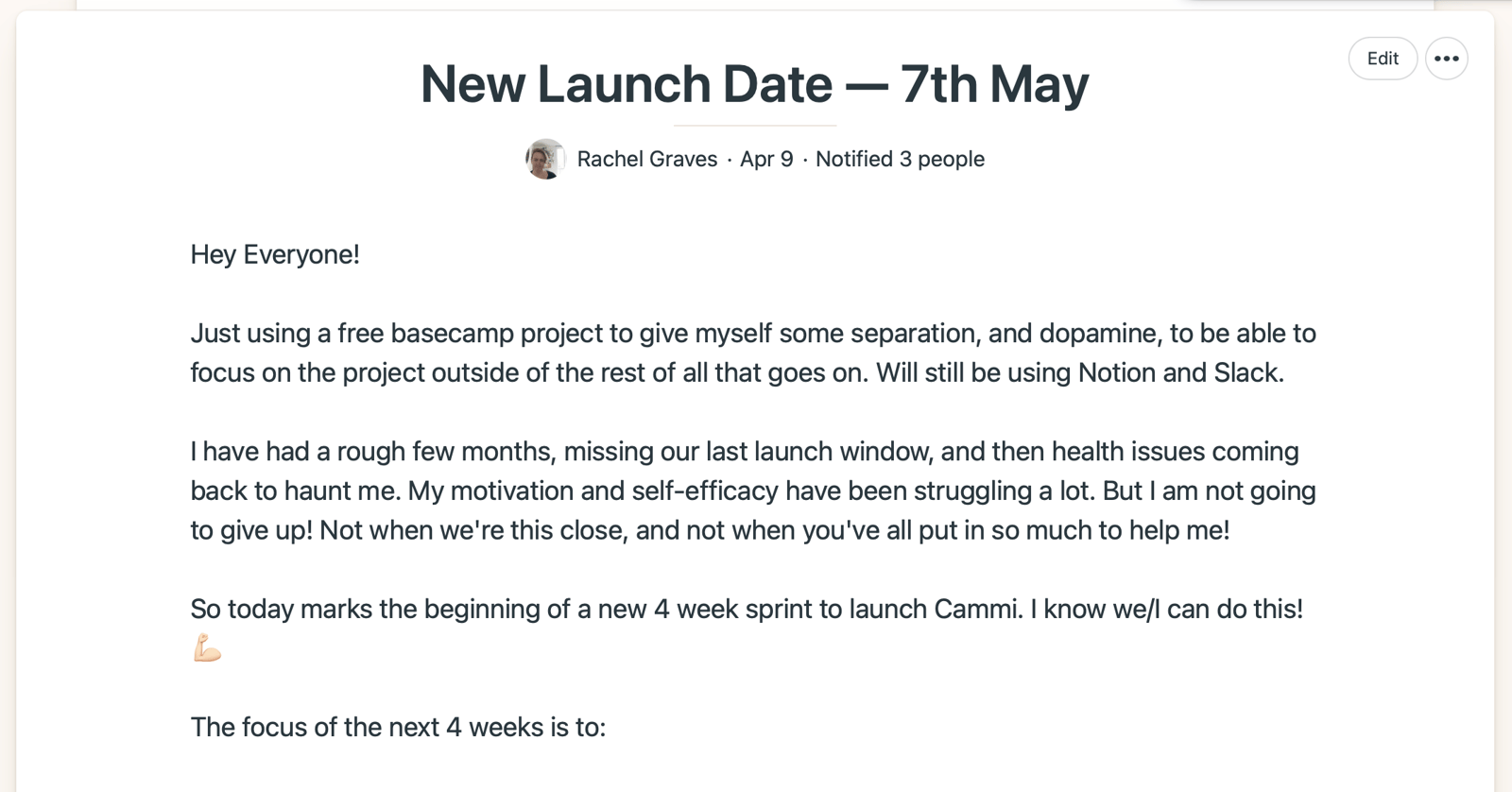
Yesterday morning I posted this to our team, a new plan, now that a resurgence in health issues seemed like it would be managed again, to launch my product.

Uploaded image
text above reads:
Hey Everyone!

Just using a free basecamp project to give myself some separation, and dopamine, to be able to focus on the project outside of the rest of all that goes on. Will still be using Notion and Slack.

I have had a rough few months, missing our last launch window, and then health issues coming back to haunt me. My motivation and self-efficacy have been struggling a lot. But I am not going to give up! Not when we're this close, and not when you've all put in so much to help me!

So today marks the beginning of a new 4 week sprint to launch Cammi. I know we/I can do this! 💪🏻

The focus of the next 4 weeks is to:

A few hours later I was writing an email to my clinical care team to let them know about three more episodes of VT. I wasn't too bothered as some more was possibly expected having only just changed my medication the day before. My VT is managed my a medical device, so as long as it stopped I'd be fine. 

By the time I finished writing the email I was at 6 episodes, a few hours later I was visiting the outpatients clinic having had many more, and a few hours after that I was waiting to be admitted to a ward to stay overnight. I'd clocked 22 episodes by the end of the day.

This is the reality for a disabled founder, in the morning we're planning, in the evening we're in hospital. We don't get to control this, it just happens to us. All we can do is keep trying. Resilience and persistence take on new meaning, and we have to accept that making progress can take much longer. Sometimes this can put us at a huge competitive disadvantage, though I think it also gives us a unique way of looking at things and that itself is something that often ends up being turned into the best new innovations.

Don't count disabled founders like me out, we're going to keep at it as long as we can.

An update on my solopreneur journey, and Cammi.

Happy Tuesday! I want to share a little update on how everything’s going with me, with Cammi, when it’s due to launch, and what’s next. But also about a chronic illness I live with, and how that's been getting in the way.

Content Warning: Chronic Illness, Near–death experiences

Many people won’t know this, but I have a serious, life-threatening heart condition. It’s genetic, and it’s going to keep getting worse over time. The only treatments available today are about managing the condition and slowing its progression, and keeping me alive.

The condition causes arrhythmias – dangerous rhythms like ventricular tachycardia (VT) and ventricular fibrillation (VF). VT is a fast but organised rhythm that can sometimes resolve on its own, or can progress into VF. VF is chaotic and lethal if untreated. I have an implantable cardiovascular defibrillator (ICD), which monitors my heart and delivers a variety of different treatments to help get my heart back into a normal rhythm. It's incredibly effective and it has saved my life multiple times.

I first became aware of this condition around fifteen years ago, when I woke up in hospital. I'd had VF and come very close to dying. Fortunately, while serious, it is a manageable condition. The management worked well at the time, and for over a decade I had very few issues. But over the past couple of years, the episodes of VT started increasing. First every day, then sometimes multiple times a day. Last year, some weren’t being treated properly, lasting hours, and I needed to go to the hospital three times.

I was put on a waiting list for an ablation — a procedure where damaged cells in the heart are destroyed to stop the arrhythmias. I had the surgery last summer, but was told my heart had significant scarring. Where most people are told an ablation will help for 5–10 years, I was promised one year. And then, just eight months later, I started feeling VT again.

This weekend I had nine episodes. Three of them were back-to-back. My ICD treated all of them, but it’s incredibly frightening. Each time, I don’t know if it’ll stop, or continue or get worse and go into VF. I’m waiting to hear back from my cardiology team. Most likely, I’ll have to increase my meds, or add/switch to something stronger. These medications block chemical reactions in the heart, but they affect the rest of the body too — and they come with risks like liver or kidney damage. As I said: management.

So why am I sharing this?

Because I want to talk about where Cammi is. Being an entrepreneur, as well as a solo product designer and developer — means facing a massive learning curve. I’ve definitely felt that, even with all my years in product companies. And it’s normal. For a lot of people, it’s already enough of a barrier to entry. I’ve been going through that curve too while also dealing with my Heart, Surgery, Recovery, and a period of depression as I came to terms with how bad my heart has gotten.

And yet... I’ve still grown. Cammi is looking better than ever. Testing with users better than ever. I set out on a six-week mission to get Cammi launched. It was a fantastic burst of energy — fun, focused, and full of promise. But we didn’t quite make it. Some key things fell behind, and a collaborator wasn’t able to deliver a crucial piece, so I had to start from scratch. I was gutted when I missed the launch date. It really took the wind out of me. And just as I was trying to recover from that, my heart issues stopped being managed.

I’ve tried to set a new four-week milestone for launch, but I just can’t guarantee I’ll be able to do the work. A lot of the work I *have* done has needed a lot more support, like pairing to help me bridge the motivation gap. I’m still committed to launching Cammi but I don’t know exactly when that will be.

And the truth is, I’m also running out of money. This has added more stress (as well as motivation). Launching Cammi and earning some income from it is more important then ever, now. I’m hopeful it’ll happen soon.

Once it does, my plan is to support the product and find my first 100 customers. If it’s successful, I’ll stay focused on it full-time. If it’s more of a slow burn, I’ll continue part-time while diversifying my income.

I’d love to be a fractional Rails developer for mission-driven companies, make videos about my solopreneur journey, release a cookbook, work on other app ideas I’ve had bubbling for years, and maybe even sell some Notion templates. But all of that relies on my heart condition being properly managed again.

I’d like to start talking more openly about my heart condition. I've always struggled because often talk of this is distressing for other people and I end up supporting them more than they support me. But I want to start shifting that. Sharing this is about educating people on what invisible disability can look like, and hopefully finding others like me, and perhaps even support.

I hope this post can serve as the bedrock of future posts, where I can talk openly about everything that I have to go through to get things done, rather than keeping them somewhat hidden because it's easier.

Finding growth without burning out

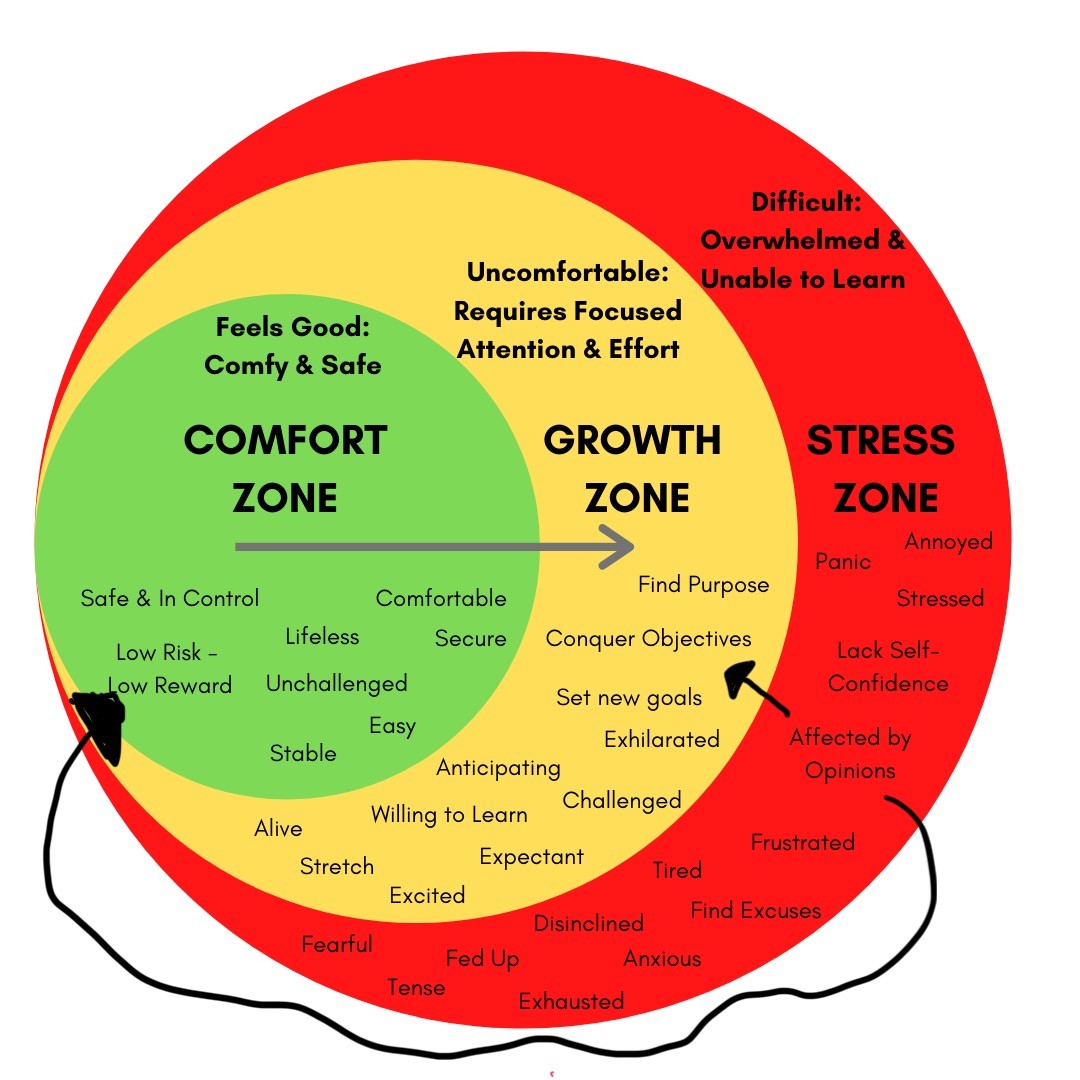
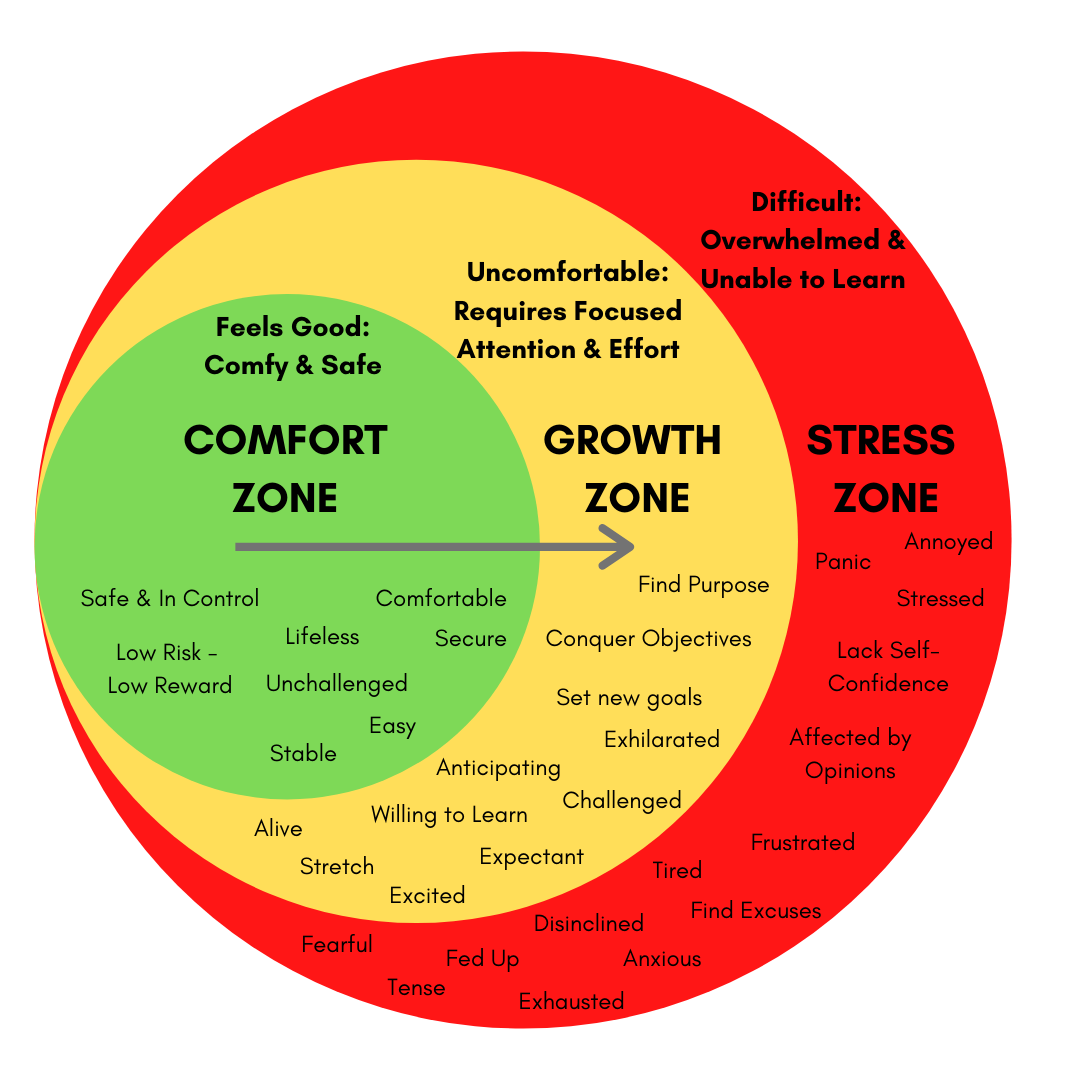
Back in 2019, when I was barely surviving a bootcamp at General Assembly, we were shown a chart about the Growth Zone. The idea is pretty straightforward—stay in your comfort zone, and you won’t grow. Push too far, and you’ll end up overwhelmed in the stress zone, where growth isn’t happening either.

The chart usually has a nice, neat little arrow, implying that most people stick to their comfort zone and just need a nudge to step into growth.


Uploaded image
For a lot of people, that probably makes sense. You try something new, push yourself a little, and if it gets too stressful, you just… slow down, step back, and adjust. I imagine that neurotypical people move through these zones at a reasonable pace—kind of like a dial that turns up and down gradually.

But If You're Neurodivergent...


It doesn’t really work like that.

Neurodivergent brains don’t do gradual. We don’t slowly nudge our way into something unfamiliar. More often, we have an idea, and before we’ve even finished the thought, our brain has already raced through every possible scenario—every risk, every potential failure, every unexpected detour.

It’s like mentally speedrunning an entire project before even taking the first step. It’s exhausting. And instead of comfortably easing into growth, we end up skipping straight over it and landing right in the stress zone.

For a long time, I didn’t realise I was doing this. Stress was just my default state. And when that’s where you’re starting from, trying to grow isn’t just tough—it feels impossible.

Where a neurotypical person might step back into the growth zone when things get overwhelming, for me, the best thing I could do was step back into comfort first.


Uploaded image


So How Do You Actually Grow?


People are often told to push themselves, but if your default zone is already stress, then this is really bad advice. Instead, it’s worth considering a more risk-averse strategy—one that starts with choosing what feels comfortable.

Someone I know put it perfectly: “Choose what’s peaceful to you.”

That doesn’t mean doing nothing, and it doesn’t mean avoiding challenges. But it does mean recognising that growth doesn’t have to come from struggle. When you start from a place of comfort, you’ll probably branch out into the growth zone in a much more natural, sustainable way. And once comfort becomes your default, stepping into growth feels a whole lot easier.

Making It Easier

One of the biggest things that has helped me is making everything smaller. The phrase “Less is more” applies to a lot of things, but especially this. The smaller something is, the less there is to process. Instead of tackling something huge and overwhelming, I try to focus on the tiniest step possible—something peaceful, something easy.

And if I catch myself spinning out, the best thing I can do is stop. Stepping away doesn’t mean giving up; it just gives my nervous system time to settle. Whether that’s a walk, making some tea, watching a video, or sitting in a quiet space for a few minutes, I’ve found that taking a break almost always makes things feel less impossible.

Writing helps too. Even if it’s just scribbling down all the nonsense running through my head, getting it out of my brain and onto a page makes it easier to see what’s actually important.

Learning to Recover Faster

Even though I spend a lot more time in my comfort and growth zones these days, I still land in the stress zone with little to no warning. The difference now is that I don’t stay stuck there as long.

Over time, I’ve found that I can take on bigger and bigger things. Sometimes I still hit the stress zone, but it takes me less time to calm down, reset, and shift my focus to something smaller and more manageable.

And that’s really the key—learning how to recover. Growth isn’t about never feeling stressed. It’s about recognising when you’re overwhelmed, stepping back, and giving yourself the space to move forward in a way that actually works.

People often ask me for hacks to be more productive, and while I understand the drive to get things done, the advice I usually give is to take a break and come back rested.

It’s not what people expect to hear. But honestly? It works.

This post was not written with A.I

I've seen a few takes on em-dashes being a tell that your content was written by A.I.

I'm "thrilled" to let you know that this post was not written by A.I – even though I just used an em-dash. 

I wonder where folk think all the robots 🤖 get their data from? I love using em-dashes, always have, always will. I'd use longer ones if I knew how to type them 😁

I know where I hope this idea ends up soon 🚀🌙

Being serious for just a minute, though. I use A.I to edit a lot of my posts, I work quite hard, giving it feedback, making sure it's my tone, only easier to read. Kind of like how Apple's handwriting improvement stuff looks like my handwriting, only actually legible now. 

There are lots of people who won't be very good at writing, possibly because of language barriers, dyslexia, lack of practice, lack of education. If A.I is helping them get content out now, all the power to those people.

Routine

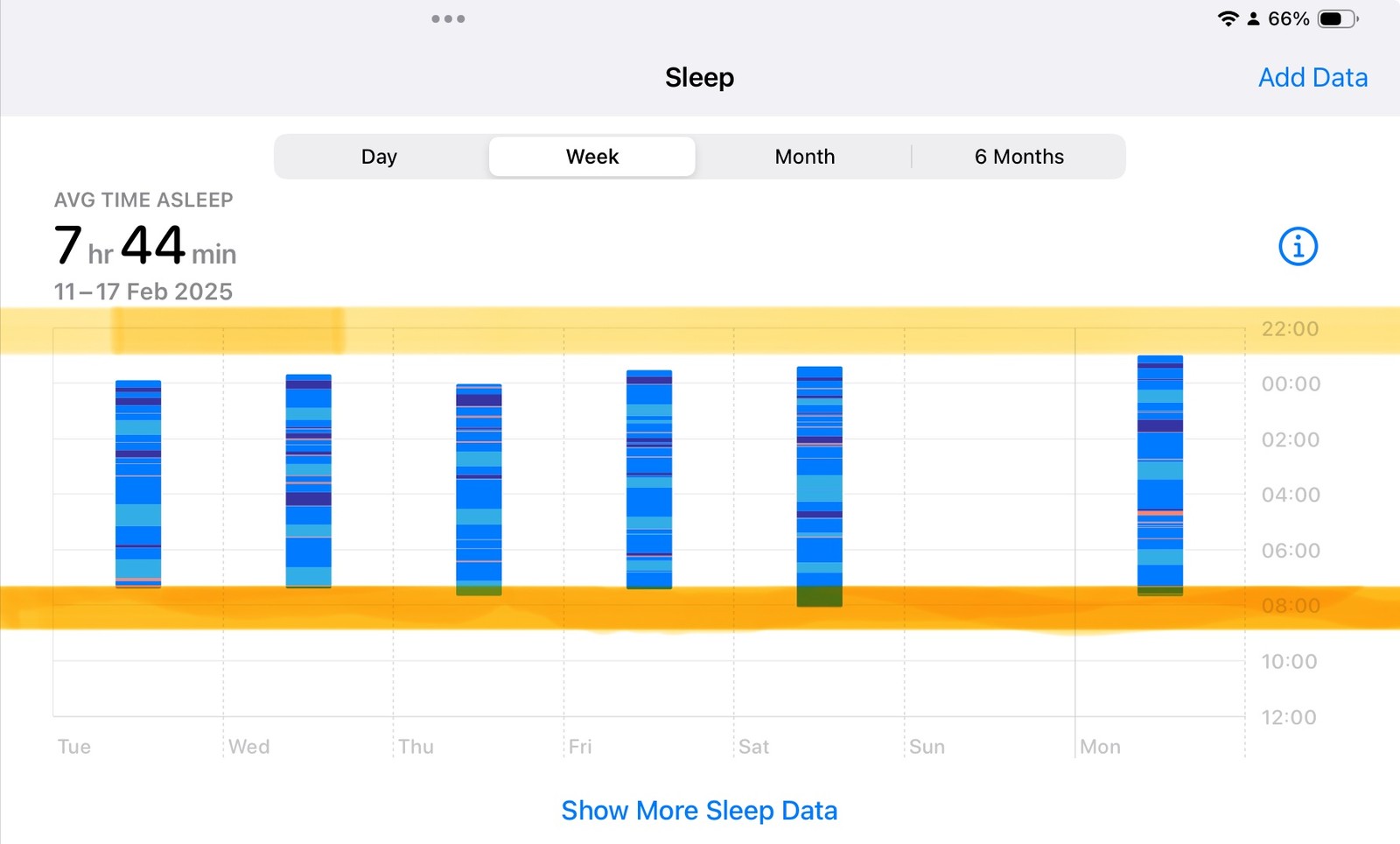
This week, I made the decision to stop working in the evenings. It’s been really difficult, and by the end of the week, I found myself asking, What have I actually done this week? Spoiler: plenty. But when you stop working three hours each evening, that adds up to nearly two full days of “lost” output.

Uploaded image

However, my sleep had been getting progressively worse over the last few months, and I was struggling with record levels of insomnia. I had started taking melatonin just to keep my sleep on track, only to watch it immediately derail the moment I stopped taking it. Something had to change—I could feel burnout creeping up on me.

One of the reasons I’d been working late was because I was so excited and energized by the work I’m doing that I struggled to switch off and actually relax. Ironically, during one of these sleepless nights thinking about work, I was reading The 12 Week Year (an excellent book). In it, the author talks about the importance of taking at least three hours a day away from work to relax and let your mind think more creatively.

That was the final push I needed. The stars aligned, and suddenly, I had the inertia to make a real change. It was the first domino to fall.

What happened next was a series of shifts:


I also decided to stop working at 5 PM and cook dinner then. I know from the books I’ve read that eating earlier—giving yourself time to digest before sleep—can help with sleep quality. And honestly? I’ve been enjoying it. It’s nice to have the evening free to do things. Spoiler: “doing things” mostly consists of discombobulating on the sofa right now.

Another big shift: I started leaving my phone and tablet in the living room instead of bringing them to bed. Watching Netflix in bed has been a habit for as long as I can remember. When I was a kid, I had a TV and VHS player in my room, and while I never kept up the tradition of having a TV in my bedroom as an adult, smart devices eventually crept in and filled that gap.

But I knew that the bright screen of my tablet, combined with the endless stream of content, was wrecking my sleep. I also knew that I struggle to relax in bed, and that this kind of passive entertainment was serving a purpose. So I expected this change to be rough. And the first night? It was. I felt antsy.

However, I had planned some activity, something I'd been thinking about for a while – I charged my Kindle. I think my stars are in alignment because lately I've had the inertia to start reading a book that had been sitting on my list for a while. I doubt I could manage this if I didn't want to read. And this is a problem I need to find a solution for.

Reading has always been a struggle for me. I think it always was, but as the reading level of books increased, so did my difficulty with focus. That said, this change has been amazing. The last few nights, I’ve read until I reached that moment where I realise I’m just looking at words but not actually absorbing them (you know the one—you finish an entire page and then go, “Wait, what?”). That’s when I turn off my Kindle and go to sleep.

The final change I made was re-establishing a proper sleep routine. Some of you may find this horrifying, but I start getting ready for bed at 9 PM, and 11 PM is my hard cutoff for sleep—no exceptions. Combined with leaving screens in the living room, this gives me plenty of time away from bright/blue light (I’ve read research suggesting it’s more about the intensity of the light rather than just the colour) so my body can naturally produce melatonin.

And honestly? It’s been incredible. I’m waking up without that intense cortisol spike, getting out of bed, and exposing myself to bright light (SAD lamp) first thing in the morning to kickstart my melatonin cycle. I’m also finding that I actually eat breakfast now—apparently another thing that helps regulate sleep.

A few more tweaks I want to make:
  • I invested in a motion sensor so I can add another SAD lamp where I make coffee. That way, when I go to make coffee in the morning, I’ll automatically get 5–10 minutes of bright light exposure—an extra cue to my body that this is when the day starts.
  • I want to start doing 90 minutes of gentle walking in the evenings. I’ve got an audiobook in mind.
Of course, I know that life is unpredictable—especially with ADHD. Something is going to come along and disrupt this routine. That’s just how it goes. I’m asking my friends to be mindful and not invite me to things that will keep me out late, and my housemate has been really respectful about keeping the evenings quiet.

When my routine inevitably falls apart, I’ll accept it. And when I’m ready, I’ll do the work to put it back together again.

Where is my clone?

I'm spending nearly all my time working on my product, Cammi, at the moment. It's an amazing tool that's going to help a lot of people who are neurodivergent work toward their goals in a more sustainable way. That's the plan anyway, and each month it inches closer to being the product that achieves this.

I'm thinking a lot about opportunity cost at the moment. Opportunity cost is a way of describing missed potential opportunity from one thing, when you're doing another.

When I left my Tech Lead position last year it was to address the opportunity cost of not working on on Cammi full-time. I wanted the opportunity to spend more time building it, to partner with people, to advertise and to give talks. However, as the year has progressed and I still don't have a finished product, I am starting to think about opportunity cost a little differently.

Throughout the year I've become a better solo product developer, gained an even better understanding of what a Minimum Viable Product should be, and… watched my bank account go down. While I've been working on my app that continues to grow in complexity and scope to achieve what it wants to do, I've seen people release the smallest of products that have gained huge traction and attention on the web. And while I've been seeing this happen, I've been having my own ideas for products that I could release in a week, or in a month. I'm really drawn at the moment to building 12 products a year, until I find the one that gains the most traction, the one that sticks.

This is all to say that continuing to work on Cammi presents its own opportunity cost. I've sat still on so many ideas only to have seen them built and validated by a market that did indeed want the low-caffeine coffee products I wanted to produce.

I'm not going to give up on Cammi, or build something else just yet, but I sure do wish I had another me who could be working on all the things that I want to be doing.