This week, I made the decision to stop working in the evenings. It’s been really difficult, and by the end of the week, I found myself asking, What have I actually done this week? Spoiler: plenty. But when you stop working three hours each evening, that adds up to nearly two full days of “lost” output.
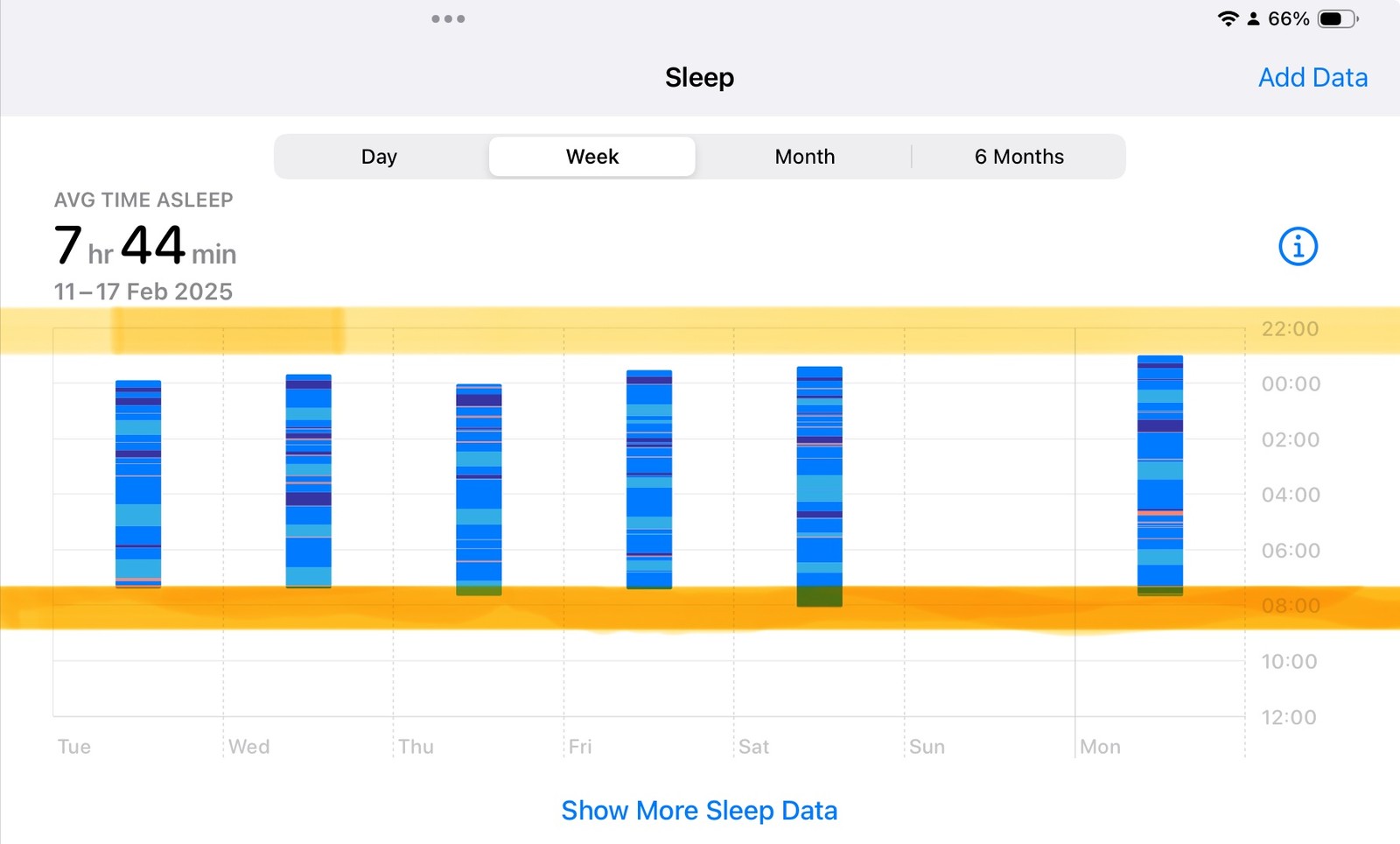
However, my sleep had been getting progressively worse over the last few months, and I was struggling with record levels of insomnia. I had started taking melatonin just to keep my sleep on track, only to watch it immediately derail the moment I stopped taking it. Something had to change—I could feel burnout creeping up on me.
One of the reasons I’d been working late was because I was so excited and energized by the work I’m doing that I struggled to switch off and actually relax. Ironically, during one of these sleepless nights thinking about work, I was reading The 12 Week Year (an excellent book). In it, the author talks about the importance of taking at least three hours a day away from work to relax and let your mind think more creatively.
That was the final push I needed. The stars aligned, and suddenly, I had the inertia to make a real change. It was the first domino to fall.
What happened next was a series of shifts:
I also decided to stop working at 5 PM and cook dinner then. I know from the books I’ve read that eating earlier—giving yourself time to digest before sleep—can help with sleep quality. And honestly? I’ve been enjoying it. It’s nice to have the evening free to do things. Spoiler: “doing things” mostly consists of discombobulating on the sofa right now.
Another big shift: I started leaving my phone and tablet in the living room instead of bringing them to bed. Watching Netflix in bed has been a habit for as long as I can remember. When I was a kid, I had a TV and VHS player in my room, and while I never kept up the tradition of having a TV in my bedroom as an adult, smart devices eventually crept in and filled that gap.
But I knew that the bright screen of my tablet, combined with the endless stream of content, was wrecking my sleep. I also knew that I struggle to relax in bed, and that this kind of passive entertainment was serving a purpose. So I expected this change to be rough. And the first night? It was. I felt antsy.
However, I had planned some activity, something I'd been thinking about for a while – I charged my Kindle. I think my stars are in alignment because lately I've had the inertia to start reading a book that had been sitting on my list for a while. I doubt I could manage this if I didn't want to read. And this is a problem I need to find a solution for.
Reading has always been a struggle for me. I think it always was, but as the reading level of books increased, so did my difficulty with focus. That said, this change has been amazing. The last few nights, I’ve read until I reached that moment where I realise I’m just looking at words but not actually absorbing them (you know the one—you finish an entire page and then go, “Wait, what?”). That’s when I turn off my Kindle and go to sleep.
The final change I made was re-establishing a proper sleep routine. Some of you may find this horrifying, but I start getting ready for bed at 9 PM, and 11 PM is my hard cutoff for sleep—no exceptions. Combined with leaving screens in the living room, this gives me plenty of time away from bright/blue light (I’ve read research suggesting it’s more about the intensity of the light rather than just the colour) so my body can naturally produce melatonin.
And honestly? It’s been incredible. I’m waking up without that intense cortisol spike, getting out of bed, and exposing myself to bright light (SAD lamp) first thing in the morning to kickstart my melatonin cycle. I’m also finding that I actually eat breakfast now—apparently another thing that helps regulate sleep.
A few more tweaks I want to make:
- I invested in a motion sensor so I can add another SAD lamp where I make coffee. That way, when I go to make coffee in the morning, I’ll automatically get 5–10 minutes of bright light exposure—an extra cue to my body that this is when the day starts.
- I want to start doing 90 minutes of gentle walking in the evenings. I’ve got an audiobook in mind.
Of course, I know that life is unpredictable—especially with ADHD. Something is going to come along and disrupt this routine. That’s just how it goes. I’m asking my friends to be mindful and not invite me to things that will keep me out late, and my housemate has been really respectful about keeping the evenings quiet.
When my routine inevitably falls apart, I’ll accept it. And when I’m ready, I’ll do the work to put it back together again.